| At a glance |
What to do |
| Prepare deliberately |
Use the guidance below during practice. |
| Skill |
Why it matters |
Practice focus |
| Observation |
Supports safer decisions |
Look ahead and reassess |
Note: Confirm current legal and DMV requirements directly with the New York DMV.
Practice tip: Focus on one observable driving skill at a time.
- Review the relevant guidance.
- Practice with clear feedback.
- Reassess before moving on.
Starting driving lessons as an adult can feel more exposed than starting as a teenager. None of your history, a long delay, a bad experience, or the worry that everyone else learned years ago, tells an instructor what you can learn now. Adult beginners do well when lessons have a clear scope: get comfortable in the seat, learn the controls, make a few safe decisions, and leave knowing what to practice next.
Brooklyn asks drivers to pay attention. Pedestrians step into crosswalks, cyclists share the street, buses pull in and out, and parked cars can block a view. That doesn't mean a new driver should face the toughest traffic on day one; instruction should build the observation and control habits city driving requires. Drive Rite Academy has guided more than 5,000 New York City drivers through this process since 2014, and that experience shapes how instruction is paced for someone starting from zero.
At a glance
-
Your first lesson should establish a starting point, not prove you can handle every Brooklyn traffic situation.
-
Legal eligibility and driving instruction are separate matters: meet New York's requirements first, then use lessons to build skill.
-
Adult beginners benefit from small, repeatable goals and feedback tied to what happened in the car.
-
City driving starts with vehicle control and observation before adding more complex decisions.
-
Nervousness is useful information when you can describe what triggers it.
Legal requirements: confirm these before you drive
A driving school can teach and coach you, but it cannot waive New York State requirements. Before scheduling a lesson, confirm the current documents and eligibility needed to drive as a learner; DMV rules can change, so the DMV is the source for permit, identification, and licensing requirements.
For most adult beginners, the first step is obtaining a New York learner permit through the DMV. Bring that valid permit to a lesson, plus corrective lenses if required. If you're unsure whether your permit is valid or what restrictions apply, check with the DMV directly rather than relying on advice from friends or social media.
A learner permit establishes the legal starting point, not readiness for every road. Review DMV guidance for your circumstances, including limits on where, when, and with whom you may drive. Legal rules come first; coaching begins after that's settled.
Coaching advice: start with the real skill level
Once the legal checklist is handled, the useful question is simple: what can you do comfortably today? Some adults have never put a car in gear. Others drove years ago and need to rebuild control. Still others handle quiet streets but freeze at a busy intersection.
Tell the instructor the truth about your starting point. "I am nervous" is a fine opening, but "I get nervous when a car is close behind me" gives the instructor something specific to address.
Drive Rite Academy's lessons are one-on-one, led by certified instructors in vehicles equipped with dual safety controls, so the pace is set by your comfort level, not a group schedule.
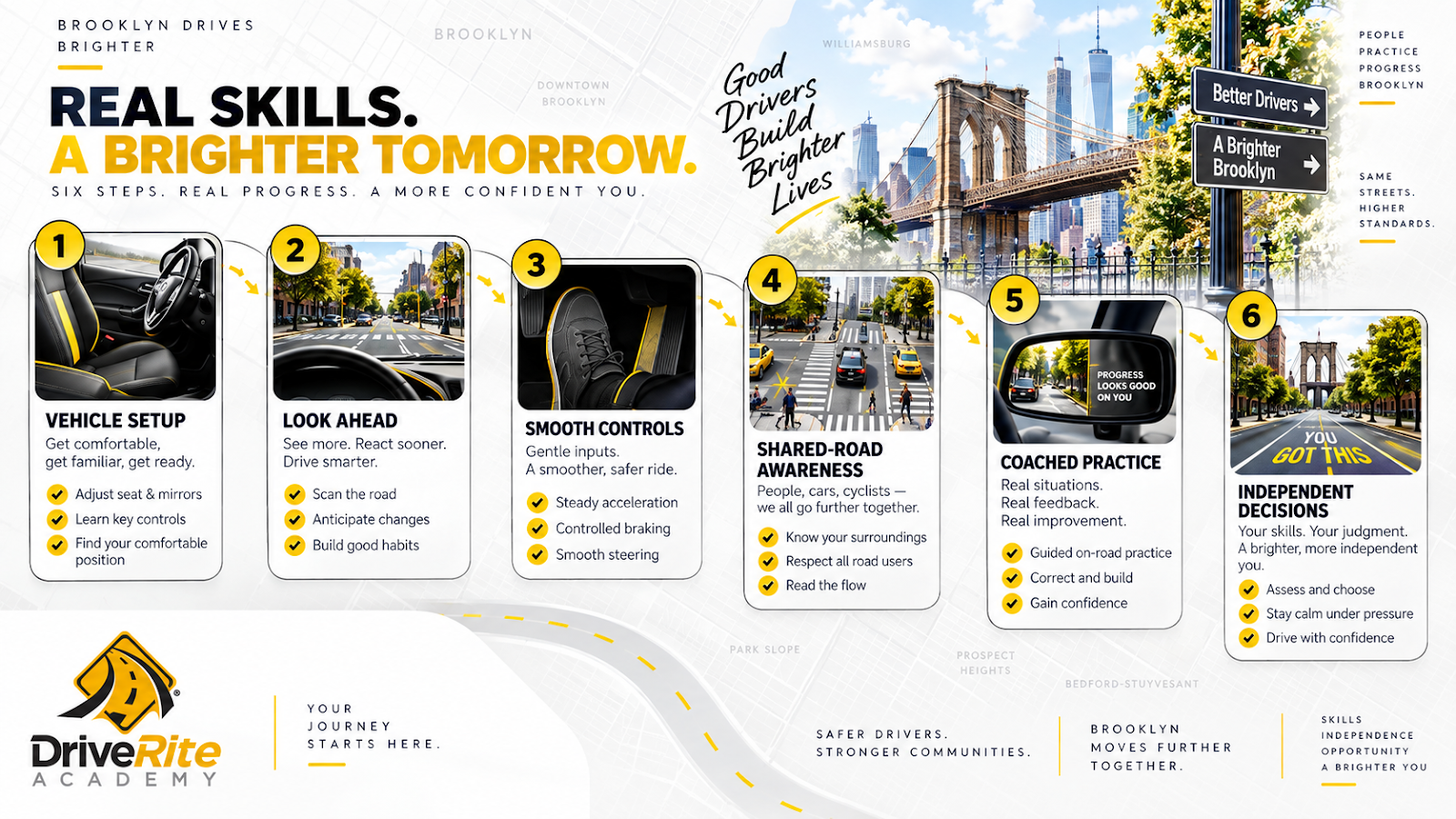
The first minutes should be unhurried: adjust the seat, set the mirrors, and learn the controls before the car moves. A driver who can't see clearly or reach the pedals confidently is being asked to solve too much at once.
Driving improves through repetition, explanation, and correction. A useful correction tells you what happened and what to do next time: "You braked late because you were looking only at the vehicle ahead" is far more useful than "be careful."
A practical framework for adult beginners
The goal is to make one layer of driving steady before adding another. A lesson plan can vary, but this order gives beginners a sensible framework.
|
Stage
|
Main focus
|
Sign you're ready for the next stage
|
|
1. Vehicle control
|
Smooth starts, stops, steering, lane position
|
Starts and stops no longer take all your attention
|
|
2. Visual routine
|
Scanning ahead, mirrors, intersections
|
You check the crosswalk and path before a turn without being reminded
|
|
3. Sharing space
|
Pedestrians, cyclists, buses, parked cars
|
You spot road users who could affect your next move before they do
|
|
4. Layered decisions
|
Turns, lane changes, busier intersections
|
You handle one added element calmly before another is introduced
|
|
5. Explaining choices
|
Narrating what you see and why
|
You can state your reasoning without a prompt from the instructor
|
1. Control the vehicle at a calm pace
Start with the physical work: smooth starts and stops, steering through a turn, holding lane position. These free up attention later; when every start and stop consumes your focus, it's hard to scan for pedestrians. Judge progress by whether you understand a correction and can try it again, not by how polished the drive feels.
2. Build a visual routine
Brooklyn driving means looking beyond the car in front of you: scan ahead for changes in traffic, check mirrors, and look at intersections before entering them. When parked vans or buses block your view, reduce speed and look again rather than pushing through.
3. Learn to share space
City driving means accounting for people who may change your plan: a pedestrian entering a crosswalk, a cyclist alongside the car, a bus re-entering traffic, a door opening from a parked vehicle. Before turning or changing position, ask what's beside you, ahead of you, and about to enter your path.
4. Add decisions one at a time
Turns, lane position, parking, and busier intersections come in as your control improves. If braking is a struggle, the next session may focus on looking ahead and easing off the accelerator. A lesson that reveals a gap gives the next session a purpose.
5. Practice explaining your choices
As confidence grows, explain what you see and why: "The van blocks my view of the crosswalk, so I am slowing and looking again." Saying the reasoning aloud helps an instructor catch a weak spot before it becomes a habit.
What professional feedback should sound like
An adult beginner doesn't need false reassurance or a lecture after every mistake. Good coaching is calm, timely, and specific, and connects the action to the cause: abrupt braking may lead back to forward vision and following distance; drifting in the lane may lead back to steering position.
Family practice can help when it's safe and calm, but loved ones often use vague commands like "watch out" that don't explain what to see or do. A structured lesson leaves you with language for the next drive: scan the crosswalk, slow earlier, check the mirror, wait for a clear path.
Measuring progress without pretending every drive is perfect
Progress shows in the quality of your decisions: setting up the seat and mirrors without reminders, smoother stops, scanning crosswalks earlier, and explaining why you waited rather than forcing a turn.
Keep a short note after each lesson, one thing that improved, one situation to repeat, and bring it to the next lesson. Regular, focused practice on one goal per session usually helps more than waiting for a perfect day and trying to do everything at once.
A calm approach to Brooklyn traffic
Brooklyn traffic can be busy, but the answer isn't to drive aggressively or treat every decision as urgent. Take the information available, make the safest reasonable choice, and proceed when the path is clear. If information is incomplete, slow down and look again; if a move can't be made safely, wait for the next opportunity.
This also guards against a common beginner trap: treating other drivers' reactions as instructions. A honk or a close-following driver can feel personal when you're new. Keep your attention on safe, legal driving decisions rather than someone else's impatience.
For a structured starting plan with a Brooklyn driving school, visit Drive Rite Academy: https://driveriteny.com/brooklyn-driving-school.
NY State DMV-licensed · Founded 2014 · 6 NYC Locations · 12 Years of Service
Drive Rite Academy has guided New Yorkers to confident, licensed driving since 2014.Explore Driving Packages →
Frequently Asked Questions
Can I begin driving lessons as an adult with no experience?
Yes. Tell the instructor that you are starting from zero. The first lesson can focus on setup, controls, and a pace that fits your current comfort level.
What should I bring to a first lesson?
Bring your valid learner permit and any corrective lenses required for driving. Check current New York DMV guidance if you have questions about your permit or restrictions.
Will I drive in heavy Brooklyn traffic immediately?
A responsible lesson plan should start at a level that matches your control and observation skills, then add complexity as you are ready for it.
What if I feel embarrassed about being nervous?
Say what is making you nervous. The more precise you can be about the trigger, the easier it is to turn that concern into a skill to practice.
Why do observation habits matter so much in Brooklyn?
Pedestrians, cyclists, buses, parked vehicles, and blocked sightlines can change the situation around a car quickly. Early scanning gives you more time to respond safely.
How many lessons will I need?
There is no honest one-size-fits-all number. It depends on your starting skills, practice between lessons, and how consistently you can make safe decisions. A plan should be based on assessment rather than a shortcut promise.
NY State DMV-licensed · Founded 2014 · 6 NYC Locations · 12 Years of Service
See what’s included in Drive Rite’s driving packages — and find the right one for you.View NYC Driving Packages →