Pass the Road Test on First Try with Drive Rite Academy: Essential NY Road Test Tips for First-Time Success
By Drive Rite Academy Team | Last Updated: December 26, 2025
This guide offers practical strategies and real-world insights for passing your NY road test. Dive into anxiety management, learn from Regina's success story, and master challenging maneuvers with actionable drills. Our aim is a clear, step-by-step roadmap to confidently pass your NY road test on the first attempt.
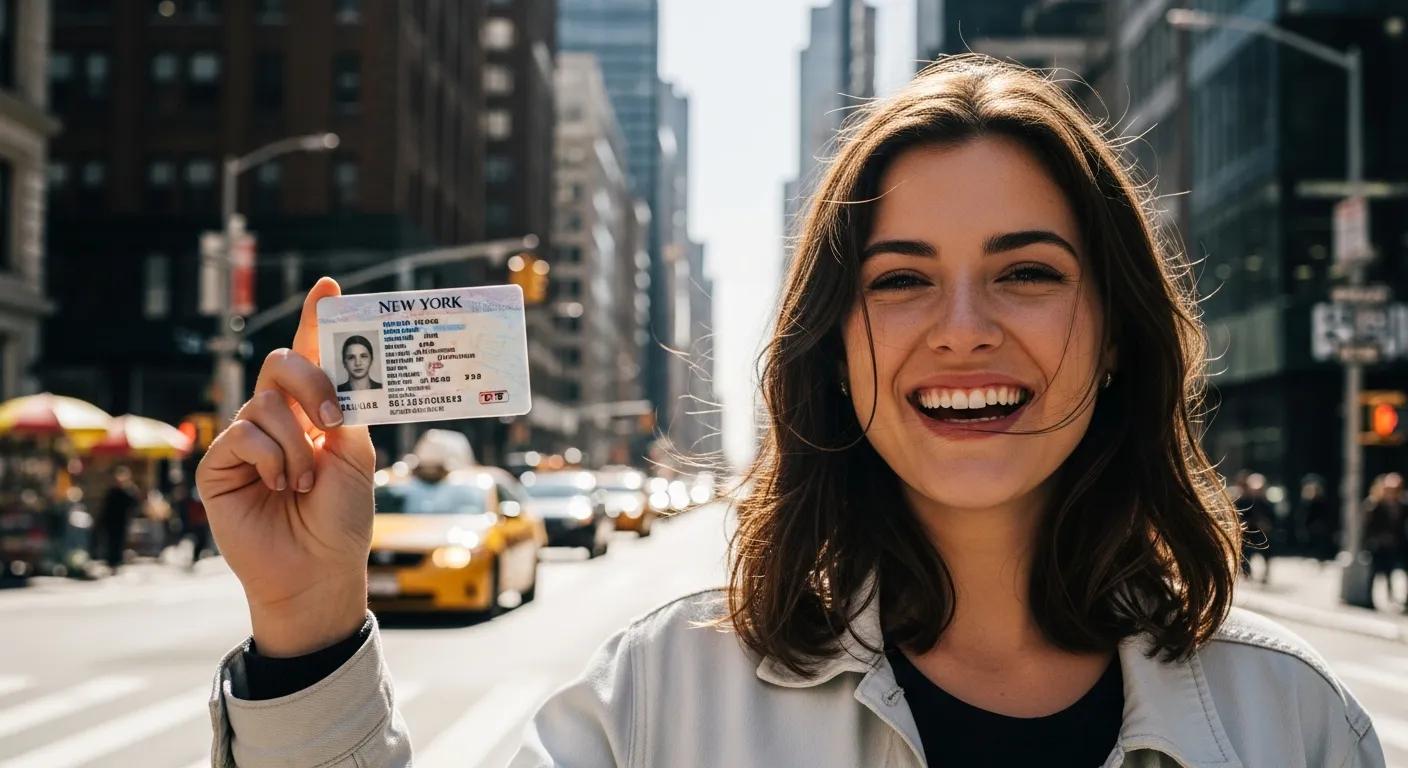
Regina, one of Drive Rite Academy's students, passed her New York road test on the first try, demonstrating a repeatable approach combining checklist readiness, focused practice, and anxiety management. This article details Regina's methods, NY road test requirements, high-value maneuvers, and mental strategies for staying calm. Readers will find a DMV-focused checklist, step-by-step maneuvers for parallel parking and K-turns, evidence-based techniques to overcome driving test anxiety, and how a professional driving school supports test-day success. It also explains the mandatory 5-hour pre-licensing course and offers defensive driving practices for new licensees. Keywords like "road test success," "first time pass," "NY road test pass tips," and "overcome driving anxiety" are integrated for immediate application.
What Makes This Guide Different? Our Unique Approach to NY Road Test Success
This guide offers more than standard advice, focusing on actionable strategies for a distinct advantage:
- The Inspiring Regina Case Study: Learn from a real-life success story. Regina's journey provides a repeatable blueprint, detailing her exact preparation, practice routines, and mental strategies for a first-time pass. It's proven, not theoretical.
- Specific, Actionable Drills for Challenging Maneuvers: We break down complex tasks like parallel parking and K-turns into step-by-step, practice-ready drills. These concrete exercises build muscle memory and confidence.
- Detailed Anxiety Management Techniques: Beyond simple breathing, we delve into evidence-based strategies for managing test-day nerves. Understand causes, recognize symptoms, and apply practical short-term and long-term techniques to ensure anxiety doesn't derail your performance.
Our commitment is to equip you with a comprehensive, personalized roadmap to confidently pass your NY road test on the very first attempt.
What Are the Key NY Road Test Requirements to Pass on Your First Try?
The NY road test requires both paperwork and a ready vehicle. Meeting these reduces administrative failures before driving skills are scored. Examiners check identity, permit validity, 5-hour pre-licensing completion, and that the vehicle is registered, insured, inspected, and has working lights, signals, horn, and seatbelts. Preparing these items in advance short-circuits common pitfalls, allowing you to focus on demonstrating controlled, defensive driving.
Which Documents and Prerequisites Are Needed for the NY Road Test?
Bring a valid, unexpired learner permit, written proof of the mandatory 5-hour pre-licensing course, acceptable identity documents (NYS DMV), and vehicle registration/insurance. Examiners also expect working safety equipment: seatbelts, signals, horn, mirrors, and a current inspection sticker. Verify these before departing. Double-checking essentials prevents delays and preserves calm on test morning.
The following table converts DMV requirements into a quick reference you can verify before leaving home. Read the table, then use the short checklist below to confirm readiness.
| Requirement |
What It Is |
Example / How to Verify |
| Learner Permit |
Permission to take the road test |
Check expiration date and permit status |
| 5-hour Course Proof |
Mandatory pre-licensing completion |
Print or digital certificate with name and date |
| Vehicle Registration |
Legal ownership/permission to drive vehicle |
Registration card or proof in car |
| Insurance |
Liability coverage required for vehicle |
Insurance card matching vehicle and registrant |
| Safety Equipment |
Working lights, horn, mirrors, seatbelts |
Visual inspection before departure |
This table helps convert abstract requirements into concrete items; confirming each entry reduces administrative disqualification. After checking the table, rehearse the maneuvers examiners grade most strictly: parallel parking and K-turns.
What Are the Most Challenging Maneuvers Like Parallel Parking and K-Turn?

Parallel parking and K-turns are frequent failure points, demanding spatial judgment, vehicle control, and calm sequencing under observation. Parallel parking requires measured speed, reference points, and minor steering corrections to align within the curb and between vehicles without excessive contact. A K-turn (three-point turn) tests situational awareness, gap assessment, and controlled steering to complete the turn in minimal moves while signaling and checking mirrors. Examiners look for safe gap selection, proper signaling, correct scanning, and smooth control—demonstrations of defensive driving.
Practice list: step-by-step drills you can repeat in empty lots or on quiet streets to build muscle memory and examiner-ready form.
- Parallel Parking Drill: Approach slowly, align rear bumper with reference car, back in while turning sharply, straighten wheels, and adjust to center in the space.
- K-Turn Drill: Signal, check mirrors and blind spots, move forward to the curb, reverse while turning, and finally pull forward into correct lane position.
- Micro-Practice Cycle: Repeat each maneuver five times in sequence, gradually increasing realism (traffic, curb distance, timing).
These drills convert deliberate practice into automatic responses. The next section explains how to manage anxiety that can interfere with executing these practiced maneuvers on test day.
How Can You Overcome Driving Test Anxiety in NYC for a Confident Road Test?

Driving test anxiety is a common, solvable barrier to first-time pass rates, as nerves disrupt decision-making and fine motor control. It arises from fear of failure, unfamiliar routes, examiner scrutiny, and time pressure. Physiologically, this causes shallow breathing, tunnel vision, and muscle tension, degrading performance. Short-term techniques like paced breathing, focused grounding, and targeted visualization reduce acute symptoms and restore cognitive bandwidth. Long-term exposure strategies—instructor-led mock tests and incremental exposure to challenging traffic—build resilience, translating test pressure into routine performance.
What Are Common Symptoms and Causes of Driving Test Nerves?
Recognizing symptoms allows quick application of coping strategies. Common physical signs include a racing heart, sweaty palms, shaky hands, dry mouth, and shallow breathing. Cognitive signs include blanking on rules, overfocusing on mistakes, or misreading examiner cues. Common NYC triggers include heavy traffic, tight curbside spaces, and unpredictable cyclists/pedestrians, amplifying perceived risk. Awareness enables preemptive coping—pre-test breathing, a brief warm-up drive, and a mental checklist—to minimize anxiety-induced errors.
List of quick recognition cues you can use to self-monitor before and during the test:
- Elevated heart rate or trembling indicates the need for immediate breathing control.
- Blanking on simple rules signals cognitive overload and the need to slow down and re-orient.
- Fixating on examiner reactions suggests shifting attention back to observable driving tasks.
Spotting a cue should prompt a short reset: exhale slowly for six counts, refocus on the next instruction, and continue. This immediate loop preserves performance and leads into specific calming techniques.
Which Practical Relaxation and Confidence-Building Techniques Help on Test Day?
Short, structured techniques reduce physiological arousal and restore task-focused attention within minutes. Breathing exercises (inhale 4, hold 1, exhale 6) counter shallow respiration and reduce sympathetic activation. Grounding practices (feeling the steering wheel, naming three nearby objects) return attention to the present. Mental rehearsal, visualizing calm, correct test completion, primes neural pathways for motor execution. Pair these with simulated tests, incremental exposure to busy streets, and explicit instruction practice during lessons to strengthen confidence.
Practice routine list: a compact pre-test ritual to use in the car before the examiner arrives.
- Two-minute breathing cycle: three rounds of 4-1-6 breathing to lower arousal.
- Micro-practice: one familiar maneuver performed in a quiet spot to warm up coordination.
- Positive scripting: silently recite a short, task-focused statement (e.g., "Scan, signal, proceed safely").
These techniques convert anxiety into manageable arousal. A supportive instructor or school can design simulations and coaching specifically targeting nerves. Drive Rite Academy offers tailored lessons for nervous drivers and simulated tests mirroring examiner conditions, providing structured practice and day-of support to increase confidence.
How Did Drive Rite Academy’s Personalized Driving Lessons Help Regina Pass the Road Test?

Regina’s journey combined targeted skill gaps, progressive exposure to NYC traffic, and a day-of logistics plan, illustrating how structured lessons translate into first-try success. Initially, Regina struggled with spatial awareness and test-day nerves. Her instructor designed scaffolded lessons, isolating maneuvers, integrating mock tests, and gradually increasing exposure to typical NYC hazards. The result was measurable: improved lane positioning, smoother maneuvers, and reduced anxiety through repetition under realistic conditions. This case demonstrates how tailored lesson plans, patient coaching, and consistent practice create the practical competence and psychological readiness for a first-time pass.
The table below summarizes lesson formats used with Regina, the skills emphasized, and the concrete benefits she gained from each approach.
| Lesson Type |
Focus Areas |
Outcome / Skill Gained |
| Beginner Fundamentals |
Steering, lane positioning |
Solid baseline control and confidence |
| Maneuver Workouts |
Parallel parking, K-turns, three-point turns |
Cleaner, examiner-ready maneuvers |
| Simulated Road Tests |
Timed drives with examiner-style prompts |
Reduced test anxiety and improved instruction-following |
| Urban Exposure |
Busy intersections, merges, cyclist interactions |
Better hazard anticipation and lane discipline |
This structured mapping clarifies how different lesson types produce distinct improvements. The next subsections explain instructor tactics and day-of supports that helped Regina convert practice into a pass.
What Role Did Tailored Instruction and Patient Instructors Play in Regina’s Success?
Tailored instruction paired task decomposition with emotional scaffolding, allowing Regina to learn without overwhelm. Instructor behaviors were as crucial as technical drills. Instructors used stepwise goals—mastering single elements, then combining them—so Regina experienced frequent small wins building competence. Coaching emphasized calm, specific feedback (what to adjust next) over broad criticism, maintaining focus on improvement. Regular simulated tests recreated pressure, allowing Regina to practice pacing, scanning, and instruction-following under exam-like conditions.
This individualized pace and feedback loop created a virtuous cycle. The next subsection explains how day-of logistics and a familiar vehicle further reduced cognitive load for test day.
How Did Road Test Day Support and Car Rental Services Contribute to Her Confidence?
Road test day support removed logistical stressors, keeping Regina’s attention on driving tasks. Driving a pre-inspected, familiar vehicle eliminated last-minute mechanical surprises and enabled muscle memory transfer. Instructor accompaniment and a brief pre-drive warm-up allowed Regina to rehearse the route contextually and receive calming, focused cues without interfering with examiner assessments. Reserving a car-for-test or arranging day-of coordination reduces cognitive load, especially for nervous drivers who benefit from continuity between lessons and the test vehicle.
Logistics checklist list: items to confirm when booking day-of support to ensure the lowest cognitive load on test day.
- Vehicle familiarity: confirm the test car matches the model used in lessons.
- Inspection and readiness: verify lights, signals, horn, and registration ahead of time.
- Instructor brief: schedule a 10–15 minute warm-up with your instructor immediately before the test.
These arrangements ensure practiced skills show up reliably during the exam. Professional day-of support is often decisive for a first-try pass. Drive Rite Academy offers road test car services and day-of support across multiple NYC locations for this continuity.
What Is the Importance of the 5-Hour Pre-Licensing Course in Preparing for the NY Road Test?
The 5-hour pre-licensing course is both a regulatory step and a primer on key safety principles, complementing behind-the-wheel training. It covers foundational topics—NY traffic law, risk awareness, distracted driving, and defensive decision-making—shaping the cognitive framework for safer, test-ready choices. Completing the course ensures exposure to standardized safety content and the risk-perception language examiners expect. Pairing the course with targeted driving lessons creates a combined knowledge-and-skill approach, improving readiness and reducing errors from misunderstanding rules.
How Does the Pre-Licensing Course Build a Foundation for Safe Driving?
The course emphasizes hazard recognition and decision-making patterns that directly map to examiner expectations, translating abstract rules into actionable habits. Topics like scanning intersections, anticipating right-of-way conflicts, and managing distractions teach mental models for real driving. Students integrating these concepts show improved scanning, safer gap selection, and consistent signaling—behaviors that protect safety and score well. Combining conceptual learning with deliberate on-road drills accelerates transfer from classroom knowledge to examiner-visible behavior.
Why Is Completing This Course Mandatory Before Scheduling the Road Test?
Completion of the 5-hour pre-licensing course is a procedural prerequisite enforced by NYS DMV to ensure baseline knowledge before a practical skills evaluation. This regulatory requirement ties course completion to eligibility for scheduling the road test. Administrative oversights—wrong name on certificate or failure to confirm DMV records—can delay or cancel an appointment. Verify course records match your learner permit details well before your planned test date. Practical advice: complete the course early in your training to focus subsequent lessons on skill refinement.
This mandatory step closes the knowledge loop for new drivers, linking legal compliance to safer driving practices. The final section outlines defensive driving practices for sustained safety after licensure.
What Are Effective Defensive Driving Practices for New Drivers After Passing the Road Test?

Passing the road test is the start of licensed driving, not the end of learning. Effective defensive driving habits convert a pass into long-term safety and confidence. Core techniques include continuous scanning, maintaining safe following distances, anticipating other road users, and minimizing in-car distractions. Practicing these in NYC conditions—with cyclists, pedestrians, and unpredictable lane changes—builds reliable responses and reduces incident risk. A plan for ongoing skill maintenance, including periodic refresher lessons and self-audit checklists, helps new drivers transition from examiner-focused performance to proactive, hazard-aware driving.
Which Defensive Driving Techniques Enhance Safety on New York Roads?
Urban defensive driving emphasizes space management, scanning beyond immediate lanes, and predictable signaling to communicate intentions in dense traffic. Techniques include maintaining at least a three-second following distance (increasing in heavy traffic), scanning intersections for noncompliant road users, and using lane positioning to maximize hazard visibility. Interaction with cyclists and pedestrians requires reduced speed, early eye contact, and extra clearance. Anticipating sudden stops near bus or bike lanes reduces collision risk. Practicing these in scenario-based drills—merging during rush hour, approaching crowded intersections, negotiating curbside parking—builds adaptive responses that examiners expect to become habitual.
The following EAV-style table compares common techniques, the situations where they apply, and a practical tip for implementation.
| Technique |
When to Use It |
Practical Tip / Example |
| Space Management |
Heavy traffic, high-speed merges |
Increase following distance; avoid tailgating |
| Scanning & Anticipation |
Intersections, crosswalks, bike lanes |
Look 12–15 seconds ahead; check mirrors every 5–8 seconds |
| Predictive Signaling |
Lane changes, turns, merges |
Signal early and maintain lane discipline to avoid surprises |
| Distraction Elimination |
Anytime behind the wheel |
Silence phone, set navigation before starting, use hands-free only when necessary |
This comparison shows how specific defensive techniques match common NYC scenarios and offers actionable tips for regular driving. The next subsection lays out a realistic schedule for maintaining and improving these habits.
How Can New Drivers Maintain Confidence and Safety Long-Term?
Sustained safety comes from deliberate, scheduled practice plus reflection on near-misses and changing conditions; confidence grows with measured exposure and periodic professional feedback. A practical maintenance plan includes scheduling a refresher lesson every 3–6 months during the first year, performing a monthly self-audit checklist after significant trips, and practicing focused drills like merging or night driving to address weak areas. Lifestyle factors—adequate sleep, limiting phone use, and avoiding driving under stress or substance influence—also reinforce cognitive capacity for defensive driving. For structured improvement, periodic professional lessons focused on advanced urban scenarios help refine techniques and maintain high safety standards.
Maintenance checklist list: practical cadence and activities to keep skills sharp.
- Quarterly refresher lessons: targeted 1–2 hour sessions on specific skills.
- Monthly self-audits: brief reviews of recent trips and identifying one habit to improve.
- On-demand coaching: schedule a single-session simulation after a stressful driving incident.
These practical routines preserve skill level, reduce overconfidence, and provide opportunities for corrective coaching. For professional advancement, organizations like Drive Rite Academy provide targeted lessons, defensive-driving-focused sessions, and ongoing support across multiple NYC locations to help new drivers maintain safety and confidence.
By integrating these detailed strategies—from mastering specific maneuvers with our drills, to applying proven anxiety management techniques, and learning from real success stories like Regina's—you're equipped with more than just information. You gain a practical, actionable framework designed to ensure your first NY road test is your only one.
About the Reviewer
This comprehensive review was compiled and verified by Certified and Professional Driving Instructors of Drive Rite Academy with over 10 years of hands-on experience in driver education across all five New York City boroughs.
Their expertise spans defensive driving techniques, road test preparation, and tailoring lessons to meet the diverse needs of beginner, teen, and adult learners. Our instructors are committed to fostering safe, confident drivers and actively contribute to road safety initiatives within New York's communities. Their insights ensure this review provides accurate, practical, and authoritative guidance for prospective students seeking quality driver education.
If you’re ready to schedule lessons, enroll in the 5-hour pre-licensing course, or discuss road test preparation options, contact Drive Rite Academy by phone at 718-928-7048 to learn about available scheduling across Brooklyn, Staten Island, Queens, and Manhattan. Representatives can explain lesson packages, mock test options, and car-for-test availability so you can choose the preparation path that fits your timeline. Booking by phone helps align lesson routes with likely DMV test locations and secures times that work around school or work commitments. Making that call starts a structured plan aimed at passing the road test and building lifelong safe-driving habits.