Best Driving Classes in Brooklyn — 2026 Complete Guide to Top Schools & Lessons

Picking the right driving class in Brooklyn is about more than price — it’s about finding the teaching style, lesson format, and DMV prep that match your goals. This guide breaks down what “best” looks like in 2026: how to evaluate schools, the lesson types you’ll find, the required 5‑hour pre‑licensing class, defensive driving benefits, road‑test prep tips, and how to compare pricing and packages. You’ll get clear selection criteria, practical checklists for the DMV, and a map of how lesson types (beginner, teen, defensive, refresher, CDL) translate into better pass rates and safer driving. We also use local examples from Drive Rite Academy to show how scheduling and services typically work — without losing the educational focus. By the end you’ll have a prioritized checklist and tools to choose the best instructors in Brooklyn and a straightforward plan to pass your road test or lower insurance costs.
Which Driving Schools in Brooklyn Offer the Best Lessons in 2026?
The best Brooklyn schools pair certified instructors with transparent pass‑rate info, flexible scheduling, and training that mirrors nearby DMV routes. Focus your selection on accreditation, instructor credentials, aggregated student feedback, and how well lessons address Brooklyn’s tight streets, one‑way patterns, and parking challenges. Evaluating those areas helps predict faster skill gains and higher road‑test success. Use the checklist below to narrow options and guide trial lessons or consultations.
Excellent instructors make the biggest difference — ongoing professional development directly improves student outcomes and road safety.
Instructor Qualifications & Ongoing Training
Research shows that better instructor training and regular professional development reduce training gaps and help lower accident rates. Systematic refresher courses for instructors are a key factor in improving overall driver education quality. IMPORTANCE AND MEANING OF THE DRIVING INSTRUCTORS' PROFESSIONAL QUALIFICATION IMPROVEMENT, M. Pehlivanova
- Accreditation & certification: Verify instructors’ formal credentials and any school affiliations.
- Proven pass rates & reviews: Look for aggregated student feedback that reflects real exam outcomes.
- Scheduling & vehicle options: Make sure lessons fit your calendar and include the transmission type you need.
- Local route prep & exam services: Prefer schools that practice on nearby DMV routes and offer mock tests.
These points give a quick screening framework. The next section highlights a local school that models these strengths.
What Makes Drive Rite Academy a Leading Brooklyn Driving School?

Drive Rite Academy stands out for easy online booking, tailored lesson plans, and a focus on the practical skills you need to pass the DMV and drive safely for life. They serve neighborhoods like Flatbush and Prospect Heights and offer regional practice across Staten Island, Queens, and Manhattan for learners who want varied route experience. Their main services include Beginner and Teen Lessons, Road Test Services, Refresher Lessons, the 5‑hour Pre‑Licensing Class, and Defensive Driving Courses — all available in flexible packages. That mix helps students move from basic control to confident urban driving, and their tailored approach supports nervous or inexperienced drivers heading into a DMV appointment. The next section explains the instructor practices behind patient, effective teaching in Brooklyn.
How Do Brooklyn Driving Instructors Ensure Patient and Effective Teaching?
Experienced Brooklyn instructors use step‑by‑step skill building, clear demonstrations, and calm, constructive feedback to build competence and reduce anxiety. Lessons are usually broken into short, measurable objectives — vehicle control, scanning, complex maneuvers — with each skill practiced in low‑risk settings before moving to busier streets. That staged approach, paired with verbal coaching and hands‑on correction, helps learners master mirror checks, lane position, and defensive spacing. Instructors also tailor tempo and scenario difficulty to each student, which cuts overwhelm and improves retention. Understanding these methods helps when you compare lesson formats and instructors.
What Types of Driving Lessons Are Available in Brooklyn?
Brooklyn lesson options span basic vehicle control up to specialized formats for teens, defensive driving, and road‑test prep. Formats include in‑car lessons, online theory classes, hybrid models, and emerging virtual training. Each lesson type aims for a specific outcome: beginner lessons build control and rules knowledge; teen programs focus on graduated‑licensing needs and teen hazards; defensive courses teach anticipation and avoidance; and road‑test services polish examiner expectations. Lesson formats — instructor‑led, in‑car practical, and online classroom — let you choose what fits your schedule and learning style. The table below summarizes common options, and the next sections expand on teen lessons.
| Lesson Type |
Target Audience |
Key Outcome |
| Beginner Driving Lessons |
New drivers with little or no road time |
Basic vehicle control and safe traffic navigation |
| Teen Driving Lessons |
Teens preparing for NY graduated licensing |
Hazard recognition, distraction management, supervised practice |
| Defensive Driving Course |
Drivers seeking improved safety or insurance savings |
Collision avoidance, space management, possible point reduction |
| 5 Hour Pre-Licensing Class |
New license applicants |
Required NYS DMV classroom module and completion proof |
| Refresher / Road Test Services |
Lapsed or anxious drivers |
Route‑specific practice, mock tests, DMV readiness |
This table helps match lessons to your goals. Below we explain how beginner lessons typically structure progress.
How Do Beginner Driving Lessons Prepare New Drivers for the Road?
Beginner lessons introduce vehicle basics and traffic rules through staged exposure: start in quiet parking lots, move to neighborhood streets, then practice on busier roads. Instructors focus on steering and speed control, signaling, safe lane changes, basic hazard scanning, and progressively harder scenarios like merging and controlled intersections. Lessons combine instructor demonstration with supervised in‑car practice so motor skills and understanding grow together. This gradual progression reduces anxiety and maps directly to DMV expectations, making road‑test readiness more predictable.
Evidence shows structured training courses help learners acquire essential driving skills more reliably than unguided practice alone.
Driver Skill Acquisition and Training Strategy
Research has explored differences between skills gained through formal courses versus long, informal experience. Studies also highlight that young drivers can overestimate their abilities, so training strategy matters for true skill development. Young drivers' overestimation of their own skill — an experiment on the relation between training strategy and skill, 1996
What Are the Benefits of Teen Driving Lessons in Brooklyn?
Teen programs are built for adolescent learners: they combine hazard recognition, distraction management, and parental reporting features to support NYS graduated licensing. Curricula prioritize high‑risk scenarios — peer distraction, night driving, and intersection scanning — and often include progress updates so parents can track supervised practice hours. These lessons reduce crash risk by sharpening situational awareness and decision‑making under teen pressures, which helps both safety and pass rates. For families, structured teen lessons make completing supervised hours easier and help parents feel confident about the learner’s readiness.
| Lesson Type |
Format |
Typical Session Length |
| Beginner Driving Lessons |
In‑car or hybrid |
60–90 minutes per session |
| Teen Driving Lessons |
In‑car with parental reporting |
60–90 minutes per session |
| Defensive Driving Course |
Classroom or online |
5–8 hours total |
| 5 Hour Pre-Licensing Class |
Classroom or approved online |
5 hours total |
| Refresher / Road Test Services |
Mock test plus in‑car practice |
60–120 minutes per session |
This schedule view helps match your availability to course formats and plan pre‑licensing and exam prep.
How Does the 5 Hour Pre-Licensing Class in Brooklyn Work?
The 5‑hour pre‑licensing class is the NYS DMV’s required classroom module for new drivers. It covers traffic law basics, driver responsibility, and core safe‑driving concepts and provides the certificate you need to schedule a road test. Approved providers offer in‑person sessions or DMV‑authorized online versions — the main difference is interaction level and convenience. Below are the class’s purpose, delivery options, and outcome.
- Purpose: Teach key rules and safe driving principles before your road test.
- Delivery: Offered in‑person or via approved online platforms.
- Outcome: You receive proof of completion the DMV accepts for road‑test scheduling.
These points summarize the class’s role and lead into a short FAQ about requirements.
Is the 5 Hour Pre-Licensing Class Mandatory for New York Drivers?
Yes. Most new drivers applying for a New York license must complete the 5‑hour pre‑licensing class and present the certificate when scheduling the DMV road test. It’s a prerequisite for test scheduling, not a substitute for in‑car practice. If you think you might qualify for an exemption, check current DMV guidance to confirm.
What Are the Options for Online and In-Person 5 Hour Classes in Brooklyn?
Online 5‑hour classes are flexible and let busy learners finish the module on their own schedule, often with fast certificate delivery. In‑person sessions offer live instructor interaction, Q&A, and a classroom setting that some people find easier to focus in. Make sure any provider you choose is DMV‑approved so your certificate will be accepted. Pick the format that fits your learning style and timeline to avoid delays when booking your road test.
| Delivery Option |
Pros |
Best For |
| Online 5‑hour class |
Flexible scheduling and on‑demand access |
Busy learners and remote students |
| In‑person 5‑hour class |
Live interaction and immediate Q&A |
Those who prefer classroom engagement |
| Hybrid approaches |
Combines online theory with instructor review |
People who want convenience plus feedback |
Weigh these trade‑offs when you pick a provider — speed versus live interaction will determine how quickly you can move to the road test.
Why Choose a Defensive Driving Course in Brooklyn?
Defensive driving teaches anticipation and collision‑avoidance tactics that reduce crash risk, and many drivers qualify for insurance discounts or point‑reduction benefits after completing an approved course. The curriculum focuses on hazard anticipation, space management, and decision‑making under stress — practical skills like scanning, gap selection, and safe following distances that translate to fewer incidents in urban settings. In New York, insurers commonly offer discounts for approved defensive driving programs (often around 10%), and some programs may qualify for point‑reduction credits. The sections below explain insurance and point benefits and the concrete skills you’ll learn.
Multiple studies show defensive driving programs lead to measurable reductions in accidents for participants.
Defensive Driving: Measured Accident Reduction
Evaluations have shown a lower average number of accidents in the year after completing a defensive driving course compared with the year before. Some groups, including female drivers in certain studies, reported significant reductions after training. An evaluation of the National Safety Council's defensive driving course in various states, 1974
- Defensive training sharpens hazard recognition and collision avoidance.
- Insurers often offer measurable premium discounts after approved completion.
- Approved courses can sometimes reduce points, helping improve driving records.
These highlights show why defensive courses deliver both immediate skills and long‑term savings.
How Can Defensive Driving Reduce Insurance Premiums and Points?
Approved defensive driving certificates are accepted by many insurers as proof of safer behavior and can trigger premium discounts — commonly around 10%, though exact savings vary by carrier. Some state‑approved programs can also reduce points on your driving record, subject to eligibility and program rules. To claim discounts or point relief, submit your certified completion to your insurer or licensing authority and confirm specific eligibility requirements.
What Skills and Benefits Does a Defensive Driving Course Provide?
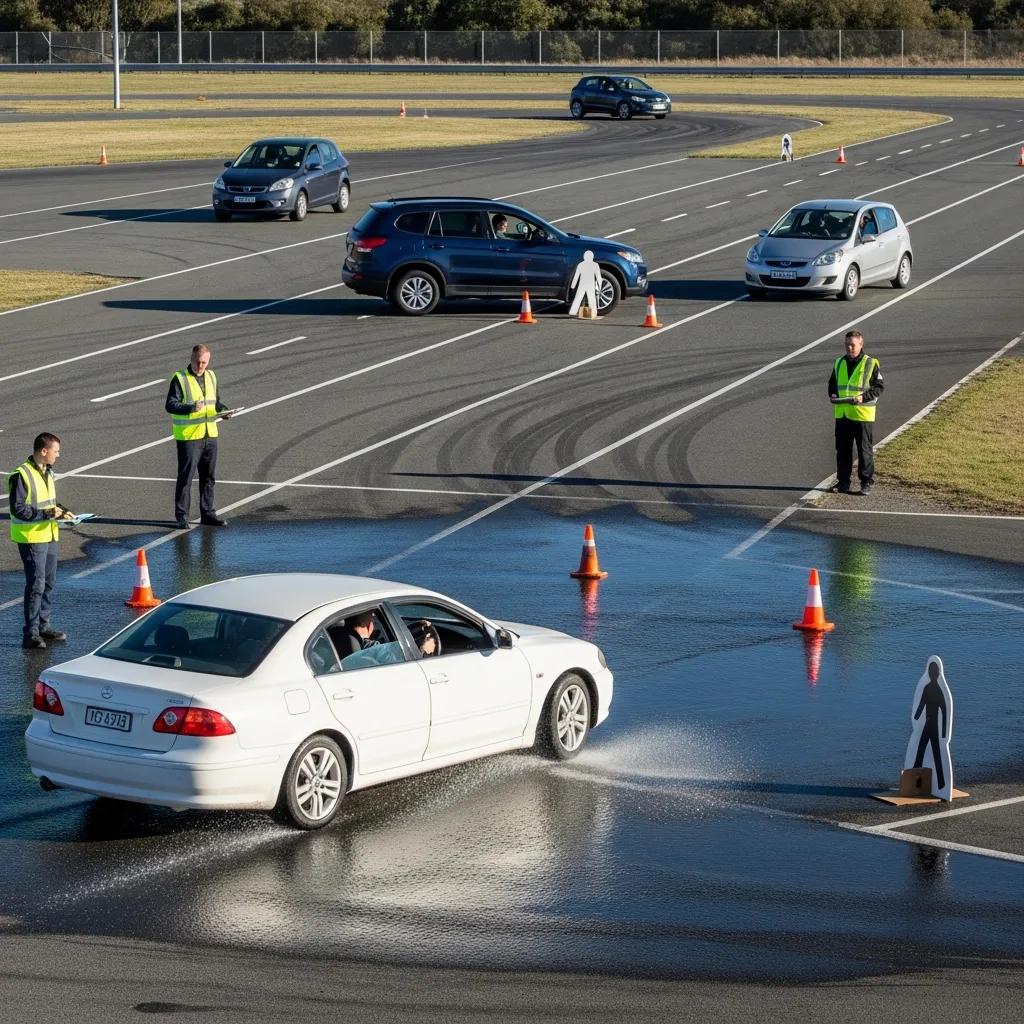
Defensive courses teach a mix of mental strategies and practical maneuvers: proactive scanning, creating and managing space cushions, speed moderation, and controlled braking. Scenario drills rehearse responses to sudden hazards like aggressive drivers, unexpected obstacles, and complex intersections you’ll encounter in Brooklyn. You’ll also gain confidence, lower driving anxiety, and improve split‑second decision‑making — benefits that support both safer driving and better road‑test readiness.
| Defensive Course Benefit |
How It Works |
Typical Result |
| Insurance discount |
Submit certified completion to insurer |
~10% premium reduction (varies by carrier) |
| Point reduction |
Approved program reporting to DMV/insurer |
May remove points (eligibility varies) |
| Collision avoidance skills |
Scenario training and practical drills |
Fewer minor incidents and near‑misses |
This table summarizes measurable benefits to help you decide if a defensive course is worth your time.
How to Prepare for Your Brooklyn Road Test Successfully?
Passing the Brooklyn road test takes focused preparation: bring the right documents, use a DMV‑compliant vehicle, and practice on likely test routes. Build a prep plan with mock tests, targeted practice on parallel parking and lane changes, and short drives that mirror examiner expectations. Common slipups — weak mirror checks, poor gap judgment when merging, and shaky parallel parking — are fixable with targeted lessons and repetition. The checklist below covers essentials and common mistakes to avoid.
- Bring required documents and your 5‑hour course completion proof.
- Confirm the test vehicle meets DMV safety rules (lights, signals, registration).
- Practice maneuvers: parallel parking, three‑point turns, controlled stops, and lane changes.
- Run mock tests with an instructor on local DMV routes to simulate the exam.
Use this checklist to structure your final practice; the following section outlines Brooklyn-specific testing challenges.
What Are Common Road Test Challenges in Brooklyn?
Brooklyn exams emphasize urban skills: navigating one‑way streets, making safe turns at busy intersections, handling narrow lanes, and executing precise parallel parking in tight spaces. Examiners watch how well you anticipate bus stops, bicyclists, and pedestrian movement, so strong situational awareness is essential. Practice scanning, controlled speed adjustments in traffic, and correct positioning for turns and merges to reduce errors. Targeted practice on these local scenarios converts general driving ability into exam‑ready performance.
How Do Drive Rite Academy’s Road Test Services Improve Pass Rates?
Drive Rite Academy’s road‑test packages include mock tests, route‑specific practice, and exam‑day coaching with DMV‑ready vehicles. Mock tests recreate examiner timing and expectations so instructors can pinpoint weak spots — parallel parking, lane discipline, or mirror usage — and give corrective drills before your appointment. Route practice builds familiarity with nearby DMV patterns and traffic flow, reducing surprises on test day. These focused services complement general lessons and give learners the rehearsal they need to arrive confident and prepared.
| Package Type |
Typical Price Range |
Duration / Sessions |
Included Prep |
| Single Lesson |
Pay‑per‑hour |
60–90 minutes |
One instructor‑led in‑car session |
| Multi‑Lesson Bundle |
Lower per‑lesson rate |
Multiple sessions |
Progressive skill building, scheduling priority |
| Road‑Test Package |
Package pricing for prep + exam day |
Mock test + exam‑day vehicle |
Mock tests, route practice, examiner coaching |
Compare these packages based on what’s included, not just price—details like mock tests and an exam‑day vehicle matter most.
What Are the Pricing and Package Options for Driving Lessons in Brooklyn?
Brooklyn pricing normally includes pay‑per‑hour lessons, multi‑lesson bundles that lower per‑session cost, and premium road‑test packages that bundle mock tests and exam‑day services. When judging value, weigh instructor experience, whether DMV prep or an exam‑day vehicle is included, scheduling flexibility, and refund/rescheduling policies. Some providers offer financing or installment plans — always check terms and total cost before committing. The table below compares common package types so you can evaluate real value.
| Package |
Price Indicator |
Duration / Sessions |
Included DMV Prep |
| Single Lesson |
Per‑hour rate |
60–90 minutes |
Basic practice |
| Multi‑Lesson Bundle |
Reduced per‑lesson cost |
4–10 sessions |
Progressive curriculum; some include mock tests |
| Road‑Test Package |
Premium/package price |
Mock + exam‑day |
Mock tests, route practice, exam‑day coaching |
Look beyond the sticker price: inclusions and instructor quality determine whether a package actually gets you to a passing test.
How to Find the Best Value Driving Lesson Packages in Brooklyn?
To find value, use a short checklist that balances instructor credentials, included exam prep, scheduling convenience, and cancellation terms with price. The cheapest option often skips the structured prep that raises pass rates. Ask schools about instructor qualifications, mock tests, route practice, and how they support nervous learners. Sometimes paying more for an exam‑ready package saves money by avoiding repeat test fees. Choose the package that fits your timeline, learning style, and the specific DMV route challenges you face.
- Prioritize instructor experience and proof of local route knowledge.
- Confirm what’s included: mock tests, exam‑day vehicle, and flexible scheduling.
- Compare total cost per successful outcome, not just the hourly rate.
These questions help you negotiate and pick the right option; below we cover financing options you may see.
Are Financing Options Like 'Drive Now Pay Later' Available?
Many schools and third‑party platforms offer installment or “pay later” plans to spread lesson costs, but availability and terms vary. Ask about deferred‑payment options, interest rates, and origination fees. Some schools partner with financing services that provide monthly payments; others accept credit or internal installment arrangements. Always check total repayment, late fees, and cancellation rules so the plan fits your budget without surprises.
| Comparison Factor |
What to Ask |
Impact on Choice |
| Payment structure |
Is installment financing available? |
Affects monthly budget and commitment |
| Fees & interest |
What are total costs and late fees? |
Determines real cost versus advertised price |
| Flexibility |
Can sessions be rescheduled without penalty? |
Affects usability of purchased packages |
Use these driving lessons to compare payment plans and complete your selection process for 2026.
Frequently Asked Questions
What should I look for in a driving instructor?
Look for certified instructors with solid experience and positive student outcomes. Check pass rates and reviews, but also assess teaching style and communication. A good instructor explains corrections clearly, adapts to your pace, and knows local roads. Personal rapport matters — comfort with your instructor speeds learning.
How can I improve my chances of passing the road test?
Practice consistently on the specific routes where you’ll be tested. Nail key maneuvers: parallel parking, lane changes, and three‑point turns. Do mock tests with an instructor to simulate exam conditions, confirm your paperwork, and use a DMV‑ready vehicle. Stay calm — breathing and routine practice help reduce test anxiety.
Are there age restrictions for taking driving lessons in Brooklyn?
There aren’t strict age limits for lessons, but learner permit and licensing rules differ by age. Teens can typically start lessons at 16 after getting a learner permit; those under 18 need parental consent. Adults can begin lessons at any age, and schools usually offer programs tailored to different learners.
What is the difference between defensive driving and regular driving lessons?
Regular lessons focus on vehicle control, traffic laws, and DMV prep. Defensive driving emphasizes anticipation and avoidance — hazard recognition, space management, and decision‑making under stress. Defensive courses add safety techniques that can reduce accidents and often lower insurance premiums.
How do I choose between online and in-person driving classes?
Choose online if you need flexibility and can learn independently; pick in‑person if you value live interaction and Q&A. Consider your comfort with technology, the need for hands‑on practice, and how quickly you want your completion certificate. Hybrid options combine convenience with instructor feedback.
What are the benefits of taking a refresher driving course?
Refresher courses rebuild confidence and update skills for those who haven’t driven recently or feel anxious. They review core techniques, traffic rules, and include practical sessions tailored to weaknesses. Refresher lessons also help if you’re preparing for a license renewal or want to improve your driving record.
Can I take driving lessons if I have a disability?
Yes. Many Brooklyn schools offer adaptive programs and vehicles with modifications to meet different needs. Instructors with disability training provide tailored lessons that focus on building confidence and practical skills. Tell the school about your requirements when you enroll so they can arrange the right support.
About the Author
Sarah Chen
Lead Instructor & Curriculum Developer at Drive Rite Academy
Sarah Chen is a certified Senior Driving Instructor and Curriculum Developer at Drive Rite Academy, bringing over 15 years of experience to driver education in Brooklyn. Specializing in urban driving challenges and DMV road test preparation, Sarah has helped thousands of students navigate Brooklyn's unique streets safely and confidently. Her expertise is rooted in a deep understanding of New York State driving regulations and a passion for fostering responsible, defensive drivers. Sarah regularly contributes to road safety initiatives and professional development programs for instructors, ensuring Drive Rite Academy's curriculum remains cutting-edge and effective.
About Drive Rite Academy: Our Commitment to Road Safety
Drive Rite Academy has been a cornerstone of driver education in Brooklyn for over two decades, committed to fostering safe, confident, and responsible drivers. Our mission extends beyond passing the road test; we aim to instill lifelong defensive driving habits through expert instruction, tailored lesson plans, and a deep understanding of local traffic dynamics. All our instructors are certified by the New York State DMV and undergo continuous professional development. We pride ourselves on transparent practices, flexible scheduling, and a supportive learning environment that empowers students of all ages and experience levels to achieve their driving goals. As a trusted community partner, Drive Rite Academy is dedicated to enhancing road safety across Brooklyn and beyond.
Conclusion
Choosing the right driving lessons in Brooklyn can boost your skills, confidence, and safety on the road. Understand the lesson types, check instructor qualifications, and compare packages by what they include — not just price. With the right school and a clear practice plan, you’ll be ready for your DMV test and for safer driving beyond it. Start your journey today by comparing local schools and picking the package that fits your goals.